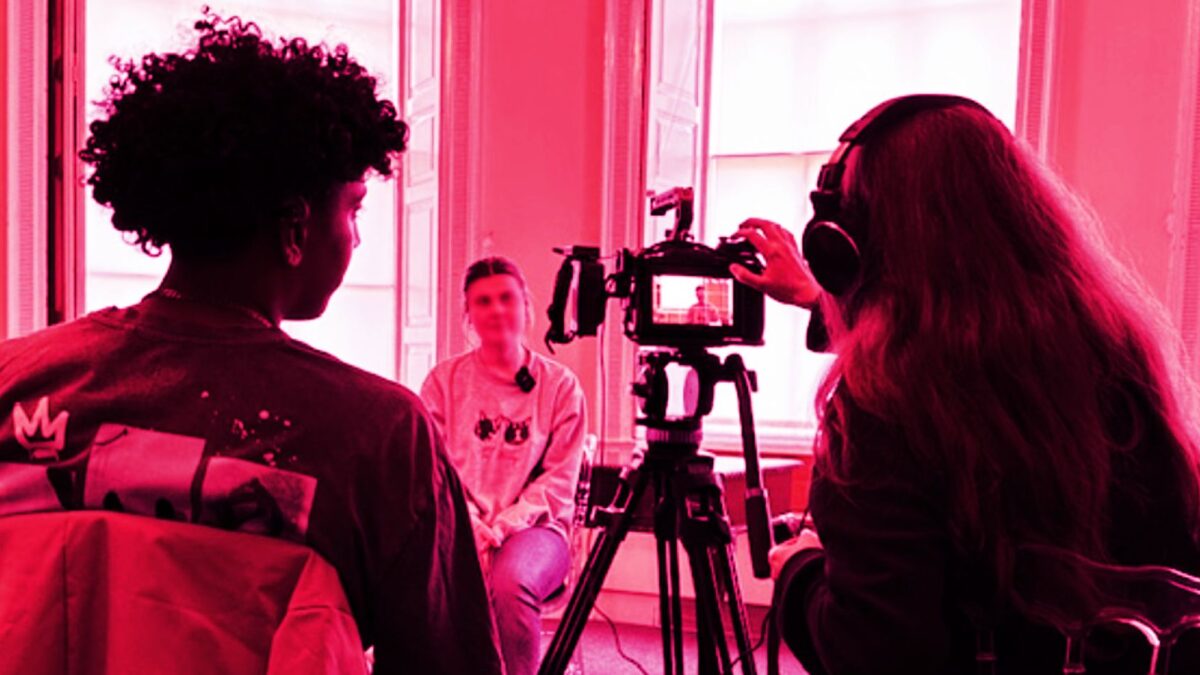
Brick by Brick by Louise Webb
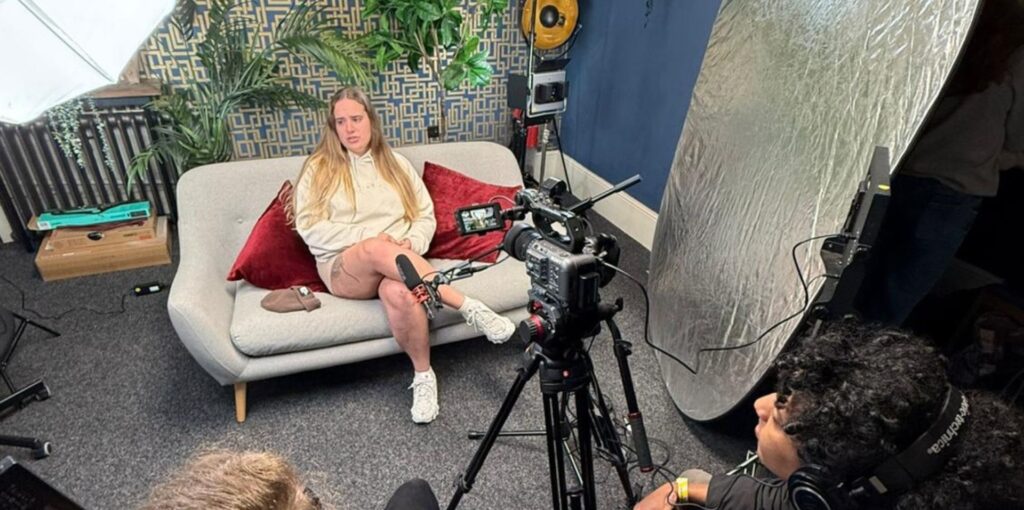
Louise’s work focuses on the life of a female bricklayer and stonemason, Ellie Dobson, from Bradford.
“When we started the Perception Busters project, I decided to make a film about a young person working in a heritage craft to show that heritage sites are relevant to young people today. Places like Wentworth Woodhouse aren’t just being preserved for the sake of it. They are being protected for future generations to enjoy and the heritage crafts required create meaningful employment opportunities for young people – careers that given them a sense of purpose and fulfilment. From my first message, it was clear she [Ellie] was passionate about her job and I knew I’d found the right person.”“ Said Louise, 23, from Parkgate, Rotherham.
Louise discovered that Ellie Dobson had studied for a Fellowship with the Society for the Protection of Ancient Buildings (SPAB). While studying media at University Centre Rotherham, Louise heard that Wentworth Woodhouse was providing creative producer traineeships, as part of Rotherham’s Children’s Capital of Culture, and leapt at the chance when she discovered two placements were available for 2025. She said:
“Working at Wentworth has only strengthened my desire to pursue filmmaking. Potentially I will enter other film festivals and see where that takes me.”
Favourite Donut by Mikey Mamah

A fresh batch of Hungarian donuts
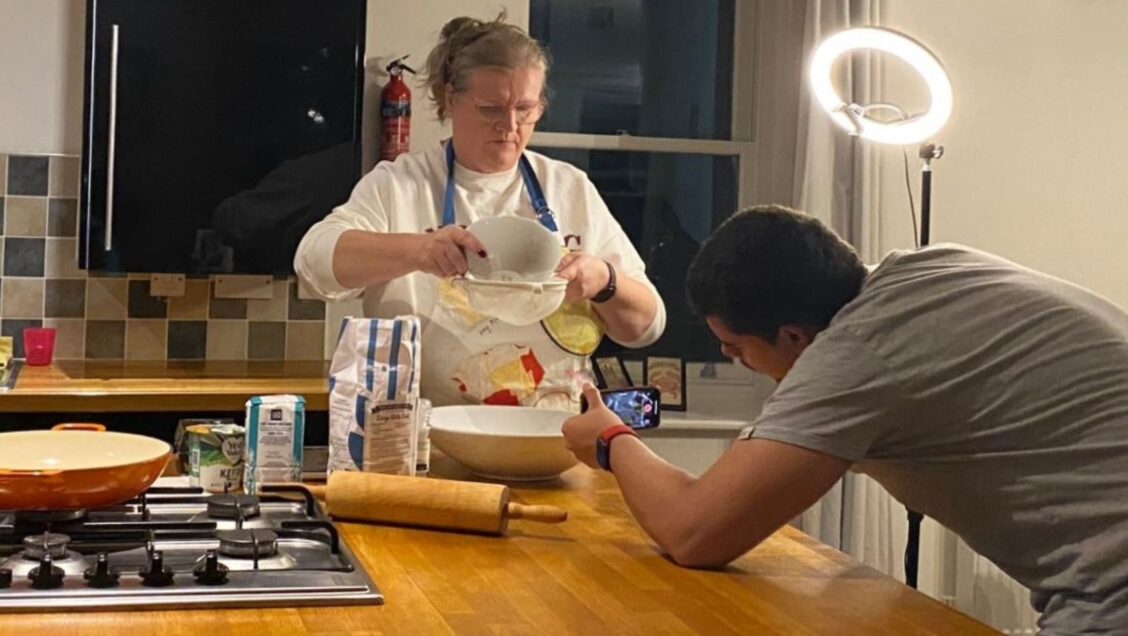
Mikey & Mum, Katalin, in action
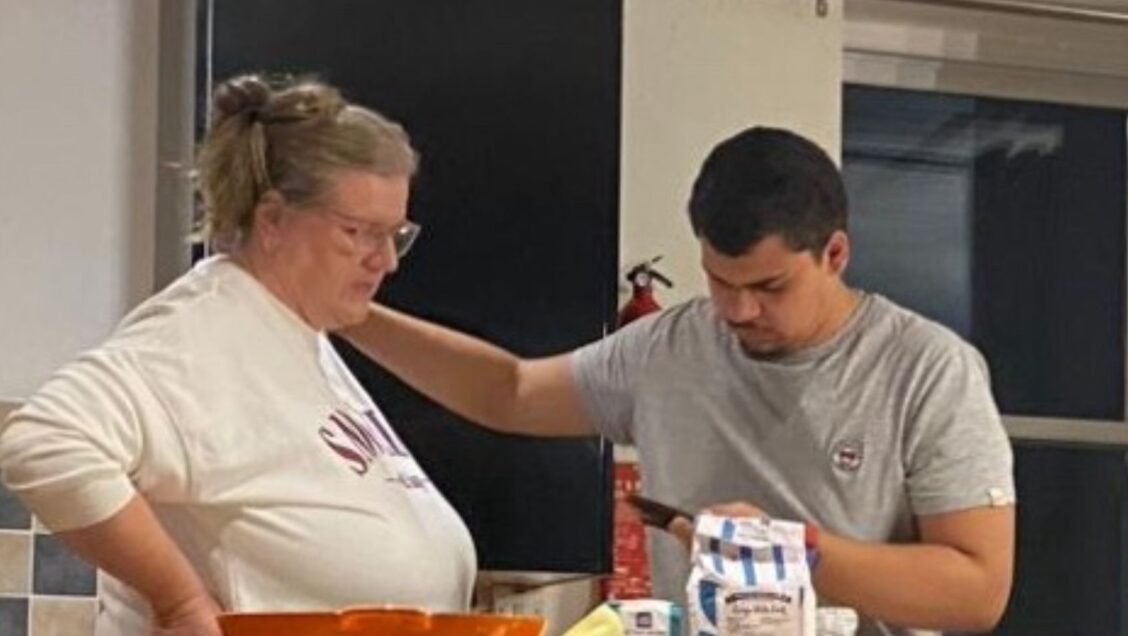
Mikey & Katalin Mamah
When your family is far away from its roots, it takes just a little taste of home to bring comfort. For 17-year-old Mike Mamah, it is a plate of sweet Hungarian donuts, freshly fried by his mum, Katalin. His film, Favourite Donut, made in their kitchen in Greenhill, Sheffield, shares her family recipe and techniques.
The Mamah family came to the city from Budapest in 2013 to join Mikey’s dad who was a doctor at the Northern General Hospital. Mikey is autistic and spoke no English, but was passionate about movies so Katalin took him to the cinema several times a week to improve his language. By the age of 10, he was making his own short films and learning about editing.
“When I heard that Wentworth Woodhouse was looking for people to get involved in its film festival I thought, what an incredible opportunity to give to young people. It sounded perfect for me. I brainstormed the theme of heritage with mum and realised that her donuts, such small things, are really important to us. They remind us of home and that is comforting when you are missing where you come from. I feel really speechless that my film is going to be seen by lots of people at the festival. I am always seeing ideas for new films and would like to become a writer and director one day,” said Mikey, who is now at Landmarks Specialist College in Rotherham preparing for his future.
Said Katalin: “The donut was one of my childhood favourites. I didn’t often make them in Hungary, but started again when we were in England to keep the tradition alive for us. They have a very different taste and appearance to a British donut and are much lighter. You can eat ten at a time! I make the atter from flour, sugar, yoghurt, and egg yolk – and my special ingredient is a hint of rum flavouring. Filmmaking gives Mikey his confidence and a means of expression and he has made a brilliant job of this.”
Stories in Stone by William Armitage

Former Dinnington Comprehensive pupil, William Armitage, 22, has a passion for the most commonly-seen old buildings in the UK – churches. Halfway through his industrial design studies at Loughborough University, he developed a passion for architecture and heritage, joined English Heritage and the National Trust, and would drive hundreds of miles to see historic buildings.
“I found the most accessible (and abundant) places to be churches. I started visiting them, drawing and writing about them, even modelling them. I couldn’t believe that nearly every town, village, and city had a beautiful, ‘ancient’ building, packed full of stories and tales from years ago, or that no one visited them. I hope the video encouraged people of all backgrounds, ages, faiths, and beliefs, to seek out their local church and explore its story.” Said William from Woodsetts.
He shot at St Peter’s, Thorpe Salvin, a church which changed his view of religion. He explained: “While visiting my parents a few years ago, my father revealed that he and my mother had a very serious illness. Even though I was not religious in the slightest, and nor were they, as I left, I felt an impulse to call at St Peter’s Church at Thorpe Salvin and ask for help and guidance. I sat down and just asked – and it felt like someone was sitting there with me, listening. Back in Loughborough, I kept doing the same, almost daily, and it brought me great comfort. Within a month, my mother and father astonishingly started to turn around and are now fully recovered. Every time I visit a church, I thank God for that – and I thank the wardens for keeping these places open. Not only have I found great joy in these buildings, I have found comfort and faith too.”
William’s passion for heritage now sees him fundraising for church building repairs and joining heritage skills workings parties.
“I’m currently writing a booklet about churches in our region, with the aim to get more people to understand them and walk through their doors. I’m not employed yet. I’d love to do something around buildings, whether it’s writing on architecture, or being hands-on with their care and development. I’d like to do something in my life to give back to places like Thorpe Salvin.”
The Weight of the Axe by Pia Woods
Laughton Common student, Pia Woods, 17, spotted the Big House | Short Films opportunity on Instagram and created a mockumentary of a fictional teen’s quest for identity after he discovers that he’s one percent Viking. He embraces his ancestry with horned helmets and public performances, but it causes rifts at home and Pia’s storyline questions whether we can go too far to find ourselves.
“I was driven by the dominant ideology in society that we must all ‘find ourselves’ and become who we are meant to be. My character James, played by my friend Filip, takes on an extreme transformation and defines himself by a meagre one percent of his ancestry. The mockumentary style allowed me to give a clear message as the filmmaker, but in a tongue-in-cheek way. I hope viewers will feel we made heritage and history fun,” said Pia, who has a keen interest in local history and is studying English literature, film studies, and history, at Wales High School Sixth Form and would like a future in production management, directing, or screenwriting.
Her dad, and her film studies peer and friend, Paige, are also in the cast, and shooting locations included Clifton Park Museum, where Pia previously had work experience in the Rotherham Archives, Boston Castle, Rotherham Minster, and Wentworth Woodhouse – a place she often visited in childhood. Pia has looked into her own family history via Ancestry and aims to take a DNA test one day so she can explore her family tree further. She won’t be following in James’ footsteps though:
“I think it’s important to reflect on our past but not become so obsessed with conforming to a culture or persona that you sacrifice other parts of yourself.”
Pies by Grace Bower
Grace Bower looks at the tradition of enjoying a pie at a football match and the sense of community it brings. In 1976, the old Rotherham United ground, Millmoor, became the first sports venue to sell Pukka Pies and Grace’s great-aunt Winnie ran the pie stall. This year, the club celebrated its 100th anniversary and the Pukka Pie tradition still lives on.
“Lots of my family worked at Millmoor and auntie Winnie shaped matchdays with her stall. For me, pies are still inseparable from football. It’s a local tradition and a taste of heritage that continues to bring people together. My film celebrates pies as more than food at the match: they are community, comfort, and joy – win or lose. Millmoor closed when I was four, but last year I got to visit it for the first time. It was great to see the place my dad and uncle have told me endless stories about. Few old stadiums remain standing, but Millmoor is still cherished by supporters – proof of its heritage in Rotherham.”